Why Businesses Should Stop Treating SEO, PPC, and Social Media as Separate Strategies
The company initiates a Google Ads campaign for prompt enquiries. Meanwhile, the SEO team works on rankings, while the social media team publishes content that is expected to drive engagement.
In theory, everything seems to be active enough.
However, after a closer look at the campaigns in question, it is clear where the issue lies. Different teams target different audiences, deliver different messages, promote different offers, and evaluate their results independently. Paid traffic comes to one landing page, organic traffic sees another offer, and social media fans have nothing to do with any of these.
This is not about the lack of marketing efforts. This is about the lack of coordination.
Modern consumers pass through search engines, websites, social media, reviews, video materials, and ads before making their final decision. Companies that consider each of these channels as something separate and independent from the others risk missing great opportunities to influence their customers' path to purchase.
An integrated digital marketing strategy combines all channels in one coherent plan.
Industry Insight
SEO, PPC, and social media have traditionally been managed as separate disciplines. Each has different platforms, techniques, reporting metrics, and specialists.
That division made sense when digital channels operated more independently. Today, customer journeys are far less linear.
A potential customer might discover a brand through a social media post, search for its services on Google several days later, click a paid advertisement, visit the website, read an article, and finally return through an organic search before enquiring.
Each interaction contributes to the final decision.
This means businesses need to think beyond individual channels and consider how marketing activities work together across the customer journey.
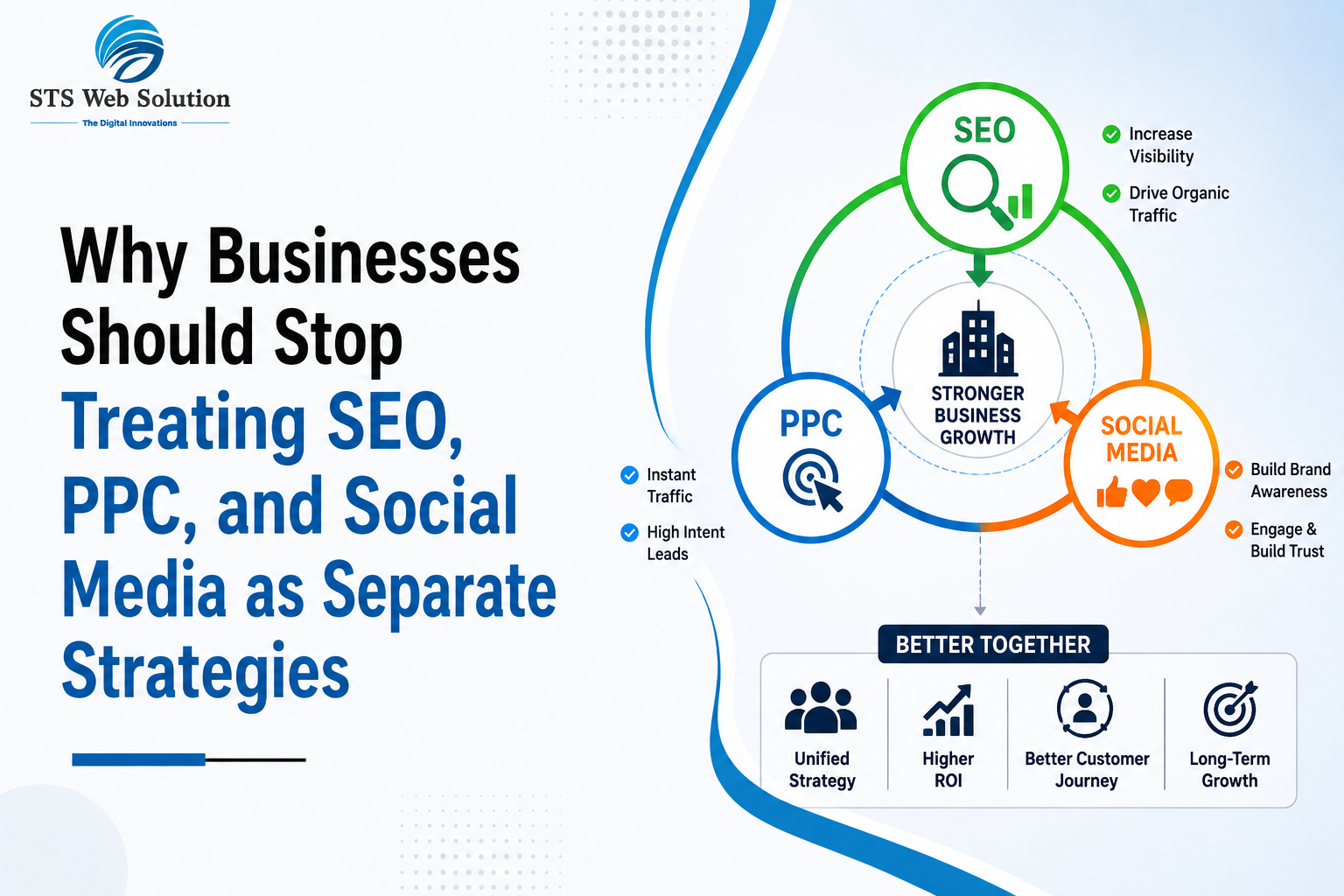
An Integrated Digital Marketing Strategy connects paid, organic, social, content, and website activities around common business objectives. Instead of asking whether SEO, PPC, or social media is the "best" channel, marketers can determine what role each channel should play.
SEO can capture existing search demand. PPC can provide immediate visibility for high-intent searches. Social media can create awareness and strengthen relationships. Content can support all three by answering questions and building authority.
The result is a more connected marketing ecosystem.
Expert Commentary
The most effective integrated strategies begin with the customer rather than the marketing channel.
Before deciding how much to spend on SEO or PPC, businesses should understand what customers need at different stages of the buying journey.
SEO Captures Existing Demand
SEO is particularly valuable when potential customers are already searching for solutions.
A well-optimized service page can attract users with commercial intent, while educational content can answer questions earlier in the decision-making process.
SEO also creates an asset that can continue attracting organic traffic after the initial content investment.
PPC Accelerates Visibility
Paid search has a different role. It can place a business in front of potential customers quickly, particularly for competitive or commercially valuable keywords.
PPC is useful for:
- Testing new offers
- Promoting high-value services
- Reaching customers with immediate intent
- Supporting seasonal campaigns
- Generating data for landing-page optimization
However, paid advertising should not operate independently from organic strategy.
Search-query data from PPC can reveal valuable information about customer language and intent that can later influence SEO content.
Social Media Builds Familiarity
Social media operates differently from search.
People may not be actively looking for a product when they encounter a brand on social platforms. Instead, businesses use social content to create awareness, demonstrate expertise, showcase customer experiences, and remain visible.
A person who discovers a business through social media today may search for that business weeks later.
That interaction makes social media an important part of the wider customer journey.
Content Connects the Channels
Content provides the bridge between SEO, PPC, and social media.
A useful industry guide can rank organically, become a social media post, support a paid campaign, and provide information for prospects who are considering a purchase.
This approach reduces duplication while increasing the value of each piece of content.
Proof & Real-World Perspective
Consider a local professional services company trying to increase qualified enquiries.
If it runs PPC advertisements without improving its website, visitors may arrive but fail to convert. If it focuses only on SEO, it may take considerable time to gain visibility for competitive searches. If it relies entirely on social media, it may generate engagement without enough high-intent traffic.
An integrated approach changes the picture.
SEO builds visibility for relevant searches. PPC captures immediate demand. Social media keeps the business visible and reinforces credibility. Content answers customer questions and supports conversion.
The same campaign can therefore generate multiple touchpoints rather than one isolated interaction.
There is also a practical advantage in sharing insights between channels.
For example, PPC data can identify search terms that convert well. Those terms can inform SEO content. Social engagement can reveal questions customers care about. Those questions can become blog topics or FAQ content. Website analytics can show which pages convert visitors, helping marketers improve advertisements and social campaigns.
This creates a feedback loop in which every channel contributes information to the others.
Analysis
Treating marketing channels independently can create several problems.
Fragmented Customer Experience
When SEO pages, advertisements, and social media posts communicate different messages, customers may struggle to understand what the business actually offers. Consistency creates familiarity and trust.
Inefficient Budget Allocation
A business may continue spending money on an underperforming channel simply because each department measures success independently. Integrated reporting provides a broader view of which activities are contributing to leads and revenue.
Missed Data Opportunities
Every channel produces useful customer information. When teams work separately, valuable insights can remain isolated. An integrated approach allows businesses to identify patterns across search behaviour, website activity, advertising performance, and social engagement.
Stronger Brand Visibility
A customer who repeatedly encounters the same business across search results, advertisements, social platforms, and useful content is more likely to remember it.
This does not mean appearing everywhere without purpose. It means creating consistent visibility where the target audience actually spends time.
SEO and PPC Should Complement Each Other
SEO provides long-term organic visibility, while PPC provides immediate exposure. They are not necessarily competing investments.
A business can use PPC to test messaging and demand while SEO builds sustainable visibility around proven opportunities.
Likewise, strong organic rankings can reduce dependence on paid clicks for certain searches while PPC continues targeting areas where immediate visibility is valuable.
Recommendations
Businesses looking to build an Integrated Digital Marketing Strategy should begin by connecting their goals before connecting their channels.
Start With One Business Objective
Instead of giving SEO, PPC, and social media completely separate goals, establish a shared objective such as qualified lead generation, e-commerce revenue, appointment bookings, or brand awareness.
Map the Customer Journey
Identify how customers discover, evaluate, and choose your business.
Ask:
- What do they search for?
- What questions do they ask?
- Which platforms do they use?
- What information influences their decision?
- What prevents them from converting?
These answers determine which channel should support each stage.
Share Data Across Teams
SEO specialists should understand PPC search data. Social media teams should know which content drives website engagement. Paid advertising teams should understand which landing pages convert.
Shared insights lead to smarter decisions.
Create Consistent Messaging
Your website, advertisements, social posts, and content should communicate the same core value proposition.
The format can change by platform, but the underlying message should remain recognizable.
Measure Business Outcomes
Do not judge SEO only by rankings, PPC only by clicks, or social media only by engagement.
Track metrics that connect marketing activity with business results, including qualified leads, conversion rates, customer acquisition costs, and revenue contribution.
Optimize Continuously
An integrated strategy is not a one-time campaign.
Review performance regularly, identify what is working, and redistribute resources according to evidence.
Closing Thoughts
SEO, PPC, and social media are powerful individually, but their real potential becomes clearer when they operate as parts of one connected system. Search can capture demand, advertising can accelerate visibility, social media can strengthen relationships, and content can connect the entire customer journey.
An Integrated Digital Marketing Strategy helps businesses move away from disconnected campaigns and toward a coordinated approach where data, messaging, and customer insights flow between channels.
For businesses looking to bring their digital activities together, STS Web Solution provides integrated digital marketing solutions designed around business objectives, audience behaviour, search visibility, lead generation, and sustainable growth. A coordinated strategy can turn separate marketing activities into a stronger and more measurable digital presence.
Ready to Build Your Sustainable Lead Generation System?
Stop relying on inconsistent campaigns and start building a digital marketing ecosystem that drives real growth. Partner with STS Web Solution to develop sustainable strategies that work for your business 24/7.
Schedule a Free Strategy Call